

Last verified: October 9, 2026. This South Dakota benefits guide explains where to apply for food, health coverage, child care, heating, housing, and unemployment support. It separates the application routes, highlights the October 2026 SNAP update, and shows how to keep a case moving when a document or decision is missing.
In South Dakota, a household may deal with the Department of Social Services (DSS), the Department of Health, a housing authority, and the Department of Labor and Regulation at the same time. A successful application to one agency does not finish the others. The practical goal is to match each need to its correct office and keep a separate record of each request.
Quick Answer: Where Should You Start?
- Food or health coverage: Start at the South Dakota BEES Customer Portal for SNAP and Medical Assistance. If you need an offline option, contact a local DSS office.
- Family cash assistance: Follow the separate TANF application instructions, including the employment-services step when required.
- Pregnancy or a young child’s nutrition: Contact South Dakota WIC for enrollment and a clinic appointment.
- Child care while working or attending school: Use the Child Care Assistance application page.
- Heating bills or a cold, inefficient home: Review Energy and Weatherization Assistance. A shutoff or nearly empty fuel tank needs a crisis contact, not just a routine application.
- Rent or affordable housing: Use SD Housing’s rental assistance resources to identify the correct housing agency or property.
- Job loss: Start with Reemployment Assistance, South Dakota’s unemployment-insurance system.
Need help immediately? Call 211 for local basic-needs referrals. If there is a threat to life or immediate physical safety, call 911. A benefits application does not automatically stop an eviction, a utility disconnection, or a court deadline.
Three Date Checks That Matter in October 2026
- SNAP now uses federal fiscal year 2027 figures. That period runs from October 1, 2026, through September 30, 2027. The federal table below is newer than the figures still displayed on the general South Dakota SNAP page when this guide was checked.
- Heating assistance is seasonal. The DSS energy page still labeled its income table “2025-2026 Heating Season” at verification. This guide does not relabel that old table as a 2026-2027 limit. Ask the Office of Energy Assistance to confirm the current season’s rules and application availability.
- Some Medicaid rules change in January 2027. Current applicants should use today’s rules, while existing expansion enrollees should prepare for the upcoming notices described below.
Whenever two pages show different dollar amounts, compare their effective dates and program names before deciding that you are ineligible. Save the dated source you used and ask the agency which standard applies to your application month.
Build a Benefits File Before You Apply
A small, organized file is more useful than a large collection of unsorted screenshots. Create one folder for the household’s basic records and one subfolder per program. Use readable filenames such as “September pay stubs” or “October heating bill.” Keep originals unless the agency specifically requests them.
Basic records to have available
- Identity, current address, and reliable contact information
- Household members, relationships, and who is requesting assistance
- Recent earnings, benefit statements, and records of other income
- Self-employment income and business expenses, when relevant
- Rent or mortgage costs, utility responsibility, and heating account details
- Child-care provider information and work or school schedules
- Medical expenses, insurance information, or disability-related documents when the program requests them
- Urgent notices, such as a disconnection warning or eviction notice
Do not send every sensitive record to every agency. Use the current application’s checklist and ask what is needed for household members who are not applying. Enter Social Security numbers and immigration information only through the agency’s approved process when required.
Explain changes instead of forcing the wrong answer
A recent layoff, harvest-season earnings, fluctuating hours, a move, or a separation may make last month’s paperwork look different from the household’s situation today. Attach a short factual explanation: what changed, when it changed, and which record supports it. If an online question cannot describe the situation, ask the office how to add an explanation.
Before clicking submit, check signatures, dates, every page of an attachment, and the contact number. Afterward, save the confirmation. Write down the next action and deadline immediately; a saved draft is not necessarily a submitted application.
South Dakota SNAP: Grocery Assistance
SNAP provides food-purchasing benefits to eligible households through an EBT card. Apply through BEES, a local DSS office, or the paper route linked on the official South Dakota SNAP page. DSS considers the household’s income, resources, expenses, and other eligibility rules.
Current federal SNAP figures
The following federal standards apply to the 48 contiguous states, including South Dakota, for October 1, 2026–September 30, 2027. Gross income is before allowable deductions; net income is after them. Maximum benefits are ceilings, not a promise that an approved household will receive that amount.
| Household size | Gross income limit | Net income limit | Maximum monthly benefit |
|---|---|---|---|
| 1 | $1,729 | $1,330 | $306 |
| 2 | $2,345 | $1,804 | $562 |
| 3 | $2,960 | $2,277 | $808 |
| 4 | $3,575 | $2,750 | $1,023 |
Source: USDA FY 2027 SNAP standards. Federal resource limits are $3,000 for most households and $4,750 for a household with an older or disabled member. Excluded resources and exceptions matter; let DSS assess the case rather than treating a bank balance or this table as a complete eligibility test.
Make the interview useful
DSS asks employed applicants for recent income proof and allows relevant shelter, dependent-care, child-support, and qualifying medical expenses to be verified. Households with a member age 60 or older or with a qualifying disability are subject to the net-income test rather than the usual gross-income test. Attend the interview even if some documents are missing and ask the specialist for help obtaining acceptable evidence.
For the interview, prepare three short lists: money coming in, required household expenses, and recent changes. Ask whether any expense needs a provider statement or other specific proof. A bank transaction alone may not explain what an expense was for.
Food emergencies, work rules, and keeping benefits
If food is running out, tell DSS when you apply and ask to be screened for expedited service. Do not assume the worker knows the urgency from the income amount alone. Ask 211 about nearby food resources while the application is pending.
Work-related rules can differ by age, health, caregiving circumstances, and the requirement being applied. Ask the benefits specialist which rule applies to each adult, whether an exemption is available, what evidence is needed, and the reporting deadline. Do not assume Medicaid’s January 2027 implementation date also controls SNAP.
After approval, record the certification end date and any interim-report requirements. Use the official EBT instructions to protect the card and PIN, check transactions, and report suspected theft. Keep shopping receipts until the household has checked that charges are correct.
Medicaid and CHIP: Apply for the Right Coverage Group
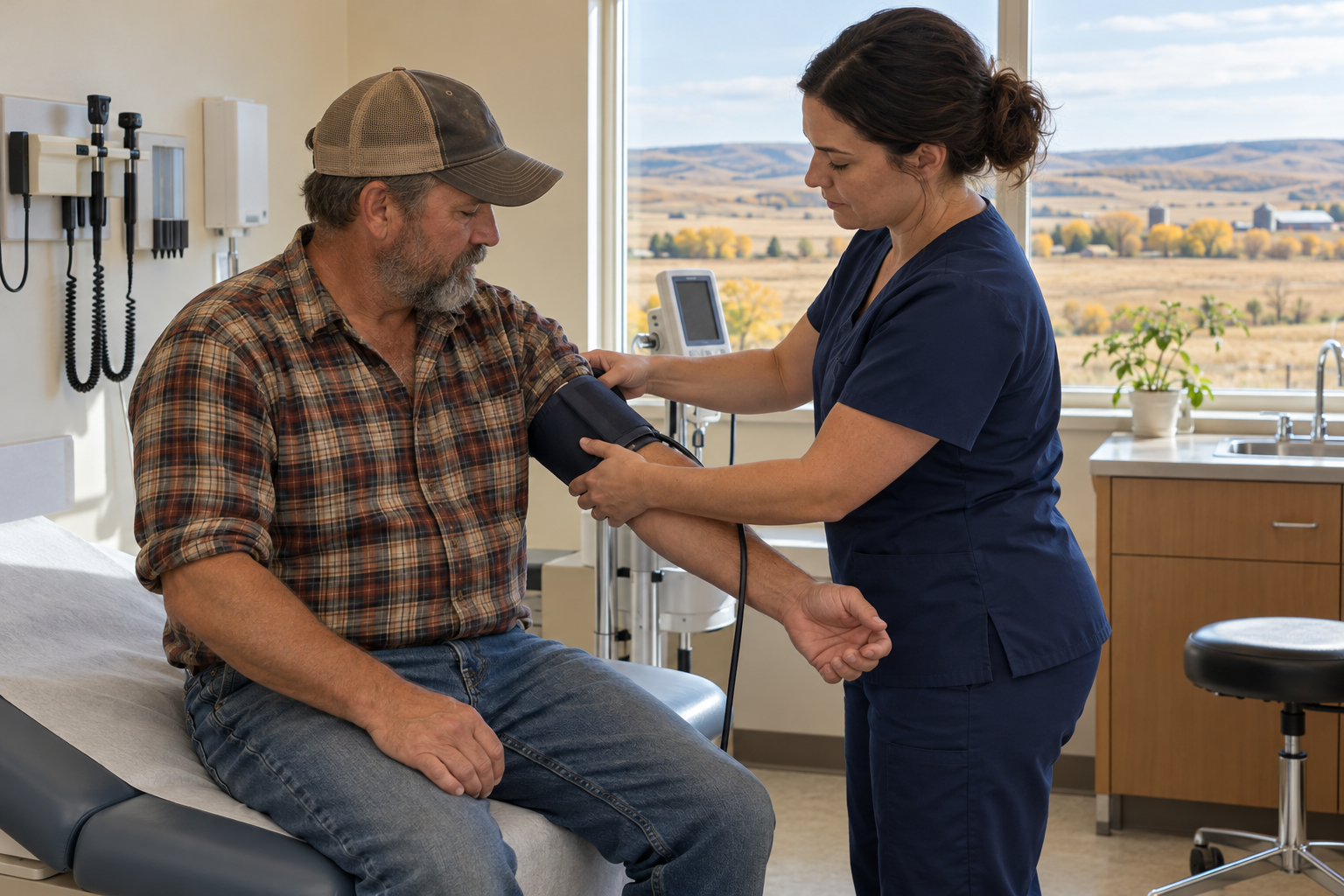
South Dakota has multiple Medicaid coverage groups. The expansion adult group covers eligible adults ages 19–64. Children under 19 may qualify through CHIP; pregnancy, disability, long-term care, and Medicare-related assistance have separate pathways.
At verification, DSS listed adult-group gross monthly limits of $1,835 for one person and $3,795 for four people. These figures belong to that coverage group. A child, pregnant applicant, or person needing long-term services should not use the adult-group table to decide whether to apply. CHIP also distinguishes between children with and without private health insurance.
Practical application steps
- Start Medical Assistance in BEES or ask the local office for the appropriate application.
- Identify each person requesting coverage. Describe pregnancy, disability, Medicare enrollment, or long-term-care needs when relevant.
- Provide income and insurance information and respond to verification requests.
- Check the written decision for each applicant, including the coverage start date.
- Before a planned appointment, confirm the provider accepts the coverage and ask whether a referral or authorization is needed.
If medical bills already exist, ask DSS whether earlier months can be considered under the rules that apply to your application. Keep the bill dates and provider details. Do not assume approval automatically resolves every earlier bill.
Prepare for January 2027 changes without confusing today’s rules
The DSS Medicaid changes page says community-engagement requirements start January 1, 2027, for some expansion adults. Non-excluded new applicants must show qualifying activity in the prior month; current recipients encounter the requirement at their first regularly scheduled 2027 renewal. DSS describes 80 hours of qualifying monthly activity and exclusions, including pregnancy/postpartum coverage, certain caregiving or medical circumstances, and American Indian/Alaska Native status, including IHS eligibility.
The same page describes six-month expansion renewals from January 2027, with an American Indian/Alaska Native exemption, and shorter retroactive-coverage periods. Check the full official instructions and your individual notice. Update your address now and keep work, school, or exemption documentation that DSS requests.
Separate change already effective October 1, 2026
Immigration-related Medicaid eligibility changes took effect October 1, 2026. If a notice mentions citizenship or immigration status, ask DSS to identify the specific rule and coverage group and whether another pathway applies. A general website summary cannot decide an individual immigration or eligibility case.
TANF: Temporary Cash and Employment Support
South Dakota TANF serves qualifying low-income families with dependent children. Eligibility includes family circumstances as well as financial need. Its application process has an employment component and a DSS eligibility component; applicants generally begin with an employment specialist unless exempt from work participation.
The state describes a 60-month adult lifetime limit and certain exceptions. Ask how previous assistance is counted and whether an exemption or special rule applies. Work-related support can include help with child care and transportation.
Before an appointment, list any barrier that could prevent participation: unavailable child care, unreliable transportation, a health limitation, or an unpredictable schedule. Ask the specialist to explain the required activity, available support, proof of participation, and what to do if a barrier changes. Keep a copy of the written plan.
Do not assume that a SNAP interview completes the TANF work component. If two appointments are scheduled, verify what each one covers and whether attendance can be coordinated.
WIC: Nutrition Support for Pregnancy and Young Children
South Dakota WIC provides supplemental foods, nutrition education, breastfeeding support, and referrals for eligible participants. It has its own enrollment and nutrition-assessment process.
The Department of Health’s income guidelines effective July 1, 2026 list annual limits of $40,034 for a family of two, $50,542 for three, and $61,050 for four. Income eligibility alone does not complete WIC enrollment.
Use SD WIC to apply or find a local office. Before the appointment, ask which identity, address, income, pregnancy, and child records to bring. If the household already receives another benefit, ask whether that can help establish WIC income eligibility.
At enrollment, ask the clinic to show you how to check available foods and benefit dates before shopping. Save the approved-food instructions, and contact the clinic when feeding needs change rather than guessing which product or substitution is covered.
Child Care Assistance: Check Both the Family and Provider
Child Care Assistance (CCA) helps eligible families with care costs while they meet work and/or school requirements. A family contribution may apply. The state’s sliding-fee page, effective March 1, 2026, lists adjusted monthly income limits of $3,769 for two people, $4,758 for three, and $5,748 for four. These are program-specific adjusted-income figures, not SNAP limits.
The application instructions require choosing a provider who meets program criteria. If approved, the child-care certificate identifies the assistance amount and eligibility period. Read it with the provider so both sides understand the authorized care.
Questions to settle before relying on the subsidy
- Can this provider be paid through CCA?
- Which child, schedule, and start date are covered?
- What co-payment or charge remains the family’s responsibility?
- How are absences, schedule changes, or a new job reported?
- When does the certificate expire, and what is needed to renew it?
Keep attendance and payment records in the child-care folder. If the approved schedule and actual work schedule do not match, contact the worker before assuming extra hours will be paid. The CCA contact number is 800-227-3020.
Heating and Weatherization: Separate the Bill From the Building
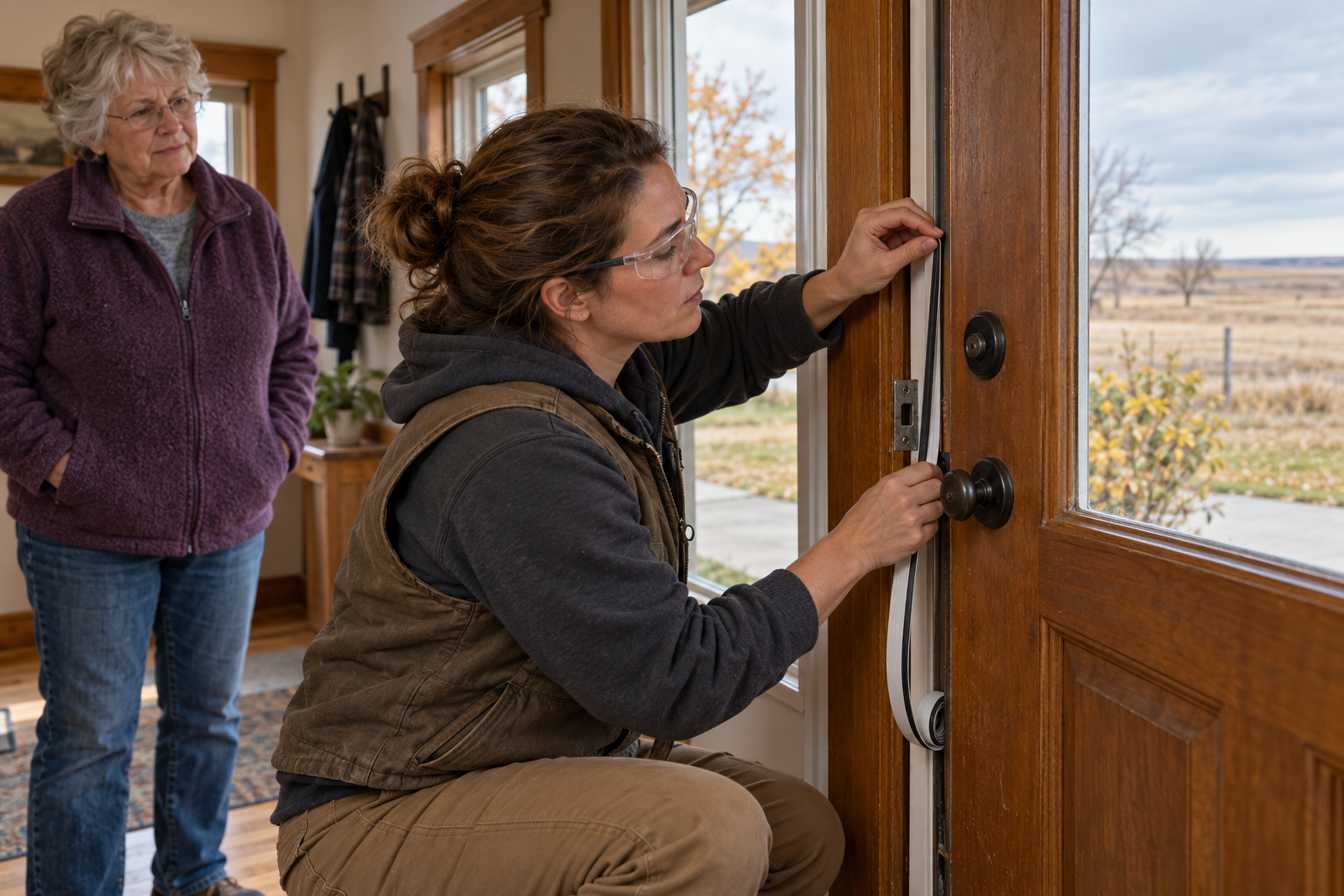
South Dakota Energy Assistance can help eligible households responsible for heating costs, with payments generally made to the supplier. Weatherization addresses energy efficiency through measures such as air sealing, insulation, and eligible heating-system work.
Current-season check: The official page still displayed 2025–2026 heating limits when reviewed on October 9. Confirm 2026–2027 limits, application timing, and available funding with the office before using a prior-season figure.
DSS asks for income from the three calendar months before application and proof of heating and electric costs; the application requires signatures from household adults. For a disconnection notice, delivery refusal, or fuel below 20%, contact 800-233-8503 and describe the crisis.
Weatherization is delivered through county-serving community action agencies listed on the state page. Funding is limited and waiting lists are possible. Renters need landlord permission; the state also describes a required landlord contribution.
Prepare a clear heating request
Record the fuel type, account holder, supplier, current balance, and the exact date service may stop. If heat is included in rent, have the lease or landlord’s statement ready. Ask whether the office needs a fill ticket, vendor statement, or another record for delivered fuel.
A pending application is not a payment arrangement. Contact the utility or fuel vendor separately about the immediate deadline and ask for written confirmation of any arrangement. For weatherization, describe the problem and ask what inspection and owner approvals are needed before any work is authorized.
Housing Help: Identify the Actual Waiting List
SD Housing explains rental-assistance options and directs residents toward relevant programs. Vouchers, subsidized properties, public housing, and emergency housing help do not share one universal application or one statewide waiting list.
Ask the agency or property manager four specific questions: Is this list accepting applications now? What area or property does it cover? What preferences apply? How must I update my contact information? Write down the program name exactly so it is not confused with a different application.
Prepare income records, household details, current contact information, and any documents needed for a claimed preference. Keep a list of the properties and agencies contacted, along with submission receipts. A place on a waiting list does not guarantee an immediate unit.
For an immediate housing problem, tell 211 the county, the deadline, and whether the household needs shelter, help remaining housed, or a longer-term rental option. Follow court and landlord deadlines while seeking assistance. Be cautious about advertisements promising a guaranteed voucher for a fee.
Reemployment Assistance: The Weekly Request Is Essential
South Dakota’s Reemployment Assistance (RA) program handles unemployment benefits. File through the official state route and review the claimant instructions for wage history, separation, ability and availability for work, and ongoing responsibilities.
An initial claim is only the first step. The state’s weekly-payment instructions say a claim week runs Sunday through Saturday, and the request for that completed week must be made within seven days. The first eligible week is an unpaid waiting week. Keep filing required weekly requests while awaiting a decision or appealing a denial.
Report hours and gross earnings accurately, keep required work-search records, and verify that each weekly request produces confirmation. If wages are missing from the monetary determination, contact the agency with the employer and pay-period evidence. RA customer service is 605-626-2452.
Create a recurring calendar entry for the weekly request and a separate reminder to check correspondence. If an electronic notice cannot be opened, contact the agency promptly; do not treat a technical problem as an extension of the deadline.
Older Adults, Disability, Caregivers, and Tribal Resources
Dakota at Home and Long Term Services and Supports help people identify community services, in-home assistance, meal programs, caregiver support, and care options. Call 833-663-9673. The information-and-referral service is available regardless of age, disability, income, or resources; each funded service has its own eligibility requirements.
When calling, describe the practical need: help bathing, getting to appointments, preparing meals, remaining safely at home, or giving a caregiver a break. Ask who completes the assessment, which services have a waiting list, and whether a separate Medicaid application is required.
Residents served by a tribal government should also ask their tribal benefits or social-services office about locally administered support and the correct service area. Explain any assistance already received so the offices can identify coordination rules. Tribal and state programs should not be assumed to use the same application, income definition, or renewal date.
If Your Application Is Delayed or Denied
First, find the exact missing step
Call or check the portal with the submission date and confirmation number. Ask whether the application was received, whether an interview remains outstanding, which document is missing, and when the next action is due. Write the answer down. Repeatedly starting new applications can make your own tracking harder; first establish what happened to the original.
If a record is difficult to obtain, explain what you have tried before the deadline. Ask whether another document, an employer statement, or assistance from the worker is available. Keep proof that you asked, even if the answer is not immediate.
Read the decision and preserve appeal rights
The DSS fair-hearing page explains how to request review. A signed written request should include the reason, address, and phone number; SNAP hearing requests may also be made verbally through the listed office or local DSS office. Different programs have different deadlines, and continued-benefit deadlines can be earlier than the general appeal deadline.
Follow the actual notice for the program, method, and deadline. Ask whether benefits can continue during review and whether repayment could be required if the decision is upheld. A conversation about correcting a document does not necessarily count as a hearing request.
Keep an appeal packet containing the notice, application, relevant records, submission confirmations, and a brief timeline. State the specific fact or decision disputed and the correction requested. For unemployment or housing, use that agency’s own appeal instructions rather than assuming the DSS hearing route applies.
A Simple Renewal and Reporting Routine
- After approval: Record the effective date, amount, reporting duties, and renewal date for each program.
- When circumstances change: Check each program’s notice. A change reported to one office may need to be reported elsewhere.
- When mail arrives: Open every page, note the due date, and put requested documents in the correct program folder.
- Before a renewal: Compare current income, household members, address, provider, and expenses with the last application.
- After submission: Keep the receipt and verify any additional request. Do not assume an upload was accepted simply because a file was selected.
Protect the file itself. Use the official portal reached from an agency website, verify unexpected calls using an independently checked number, and never give an unsolicited caller a password or EBT PIN. Do not send a complete identity packet to a person promising faster approval.
Frequently Asked Questions
Can I apply while I am working?
Yes. Employment is not an automatic disqualification. Each program evaluates its own income, household, expense, and activity rules. Provide accurate earnings rather than assuming full-time or part-time work settles the question.
Can BEES handle every benefit in this guide?
No. It is a starting point for SNAP, Medical Assistance, and the online Child Care Assistance application linked by DSS. WIC, energy help, housing, unemployment, and other services have their own instructions. Use the program links above and keep separate confirmations.
Why does the SNAP table differ from the South Dakota website?
The federal fiscal-year change occurred on October 1, 2026. At verification, the state’s general page still showed earlier figures. This guide uses USDA’s dated FY 2027 table and links both sources so readers can check the difference.
Do I need to complete Medicaid work reporting in October 2026?
Use your individual notice. The new expansion community-engagement requirements described by DSS begin January 1, 2027. Current enrollees should prepare for their 2027 renewal instructions, while SNAP or TANF may already impose separate duties.
Can renters get heating or weatherization help?
Potentially. Heating responsibility and household eligibility matter for bill assistance. Weatherization also requires the property approvals described by the state. Ask about both programs rather than assuming the lease rules are identical.
What if I cannot travel to an office?
Call the program and describe the barrier. Ask about online, mail, telephone, accessible communication, interpreter, or authorized-representative options available for that specific step. Confirm the arrangement instead of missing an appointment without notice.
Does a denial for one person mean the whole family is ineligible?
Not necessarily. People can fall into different coverage or benefit groups. Read each determination and ask whether all requested household members were evaluated under the appropriate rules.
Should I wait for every document before contacting DSS?
Contact the office promptly and ask what is needed to establish an application and what can follow. For SNAP, the state specifically says to attend the interview even if some verification is not yet available.
Official Sources and Application Links
The sources below were reviewed for this guide on October 9, 2026. Recheck dated standards and notices before relying on a figure in a later month.
- South Dakota DSS: SNAP applications and verification
- USDA: FY 2027 SNAP income, benefit, and resource standards
- BEES Customer Portal and local DSS offices
- DSS: Medicaid coverage groups and upcoming Medicaid eligibility changes
- DSS: TANF
- Department of Health: WIC and July 2026 WIC income guidelines
- CCA income eligibility and application instructions
- DSS: Energy and Weatherization Assistance
- SD Housing: Rental assistance
- DLR: Reemployment Assistance and weekly payment requests
- DHS: Long Term Services and Supports / Dakota at Home
- DSS: Requesting a fair hearing
Related FactBob Guides
Bottom line: Start with the need that cannot wait, use the correct official application, and record the next step before moving to another program. The dated rules, complete documents, and timely follow-up matter more than finding a single all-purpose benefits form.
FactBob is an independent informational website, not a government agency. This guide is general information, not legal, financial, medical, or eligibility advice. The administering agency decides eligibility and benefits. Rules, funding, processing times, and application availability can change. Images are AI-generated illustrations and do not depict actual applicants, agency personnel, or service locations.

