
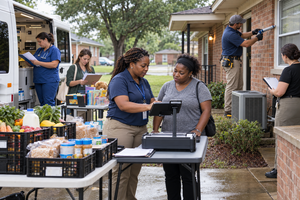
Mississippi residents may be able to use several public programs at the same time when food, health coverage, child care, energy bills, housing, or lost wages strain the household budget. The agencies do not use one universal eligibility test, however. Each program has its own household rules, income method, documents, deadlines, and renewal process.
This practical Mississippi benefits guide for 2026 explains where to start, which application portal or agency handles each program, what documents to prepare, and how to respond when a case is delayed or denied. Information and links were checked against official state and federal sources on September 26, 2026. Rules and funding can change, so always follow the latest notice from the agency handling your case.
Quick start: Use the AccessMS Common Web Portal for programs that accept an online application through the state portal. SNAP, TANF, Medicaid, LIHEAP, and Weatherization each have official instructions explaining whether the portal, a county office, a regional Medicaid office, or a local Community Action Agency completes the case. WIC, unemployment, and most housing programs use separate systems.
Editorial guidance reviewed October 12, 2026. My priority would be to protect the household’s next few days while starting the applications that can support the following months. That means checking a shutoff or housing deadline before working through a general checklist, and starting an unemployment claim alongside other applications after job loss. The recommendations in this guide are editorial judgments based on the linked program guidance; agencies decide eligibility and availability.
Mississippi Benefits at a Glance
| Need | Main program | Where to begin |
|---|---|---|
| Groceries | SNAP | AccessMS or a local MDHS county office |
| Health coverage | Mississippi Medicaid and CHIP | AccessMS, Medicaid application, or regional office |
| Cash help for families | TANF | AccessMS or MDHS |
| Pregnancy and early-child nutrition | Mississippi WIC | County health department or WIC clinic |
| Child care tuition help | Child Care Payment Program | MDHS Early Childhood Care and Development |
| Utility bills and energy emergencies | LIHEAP | AccessMS and a local Community Action Agency |
| Home energy improvements | Weatherization Assistance | AccessMS pre-application and local agency follow-up |
| Affordable rent | Public Housing or Housing Choice Voucher | Local Public Housing Authority |
| Lost wages after qualifying job separation | Unemployment Insurance | Mississippi Department of Employment Security |
| Older-adult and disability services | DAAS, Medicaid, and HCBS waivers | MS Access to Care or Mississippi Medicaid |
Applying for one program does not automatically enroll the household in every other program. A SNAP approval does not guarantee Medicaid, child care, LIHEAP, or housing assistance. It is often worth applying separately when each need exists.
Before You Apply: Build One Document Folder
A complete application is easier to process. Collect the documents that apply to your household, but do not postpone an urgent application simply because one item is missing. An agency may allow you to submit the application first and provide verification afterward.
Identity and household information
- Photo identification, when available
- Birth dates and legal names for household members
- Social Security numbers or eligible immigration documents for people requesting benefits
- Proof of Mississippi residence, such as a lease, utility bill, or official mail
- Custody, guardianship, pregnancy, disability, or school documents when relevant
Income and work records
- Recent pay statements and employer contact information
- Self-employment income and business expense records
- Unemployment, Social Security, pension, child support, or other income notices
- Work schedule, school enrollment, or approved training records for child care
- Employer health insurance information for Medicaid or CHIP applications
Housing and expense records
- Lease, rent receipt, mortgage statement, or housing notice
- Electricity, gas, propane, water, and other utility bills
- Disconnect, eviction, foreclosure, or unsafe-housing notices
- Child care invoices and provider information
- Medical, disability, dependent-care, or child-support expenses when the program asks for them
Keep a submission record
Save the confirmation number, submission date, uploaded-file names, screenshots, mailed copies, and the name of any worker you speak with. Open every notice promptly. A request for verification or interview appointment usually has a deadline, even when the original application remains pending.
How AccessMS Fits Into the Application Process
AccessMS is Mississippi’s Common Web Portal. It is an important starting point for several benefit programs, but it does not mean one agency decides every case. MDHS, the Division of Medicaid, Community Action Agencies, and other program offices may each conduct their own review.
What the portal can help you do
- Submit applications for supported programs
- Renew eligible benefits
- Review notices after an account is established
- Upload requested documents
- Check an application status or report a case change when supported
Portal application versus local review
An online submission is usually the beginning, not the entire process. SNAP may require an interview. Medicaid may request insurance or immigration information. LIHEAP and Weatherization can be routed to a local Community Action Agency. Watch for mail, email, portal notices, and phone calls after submission.
SNAP Food Assistance in Mississippi
The Supplemental Nutrition Assistance Program provides food benefits through an Electronic Benefit Transfer card. The official Mississippi SNAP application page explains the online route, county-office help, interview process, document upload, and decision notices.
I would put SNAP early in the process when groceries are squeezing the budget. Its recurring food support can leave more of the household’s own money available for other bills, but the award is not cash that can be redirected to rent. If the kitchen is nearly empty, ask MDHS about expedited screening and look for immediate food referrals while the case is reviewed. Waiting to collect a perfect folder is a poor tradeoff when the official instructions allow the application to be filed before all verification is ready.
Who may qualify
MDHS considers household composition, countable income, resources when applicable, allowable expenses, citizenship or qualified immigration status for applicants, and other program rules. A household can include people who live together and purchase or prepare food together, but special household rules apply in some situations.
How to apply
- Apply online through AccessMS or request an application from the local MDHS county office.
- Submit the application even if every verification is not yet available.
- Complete the interview if MDHS schedules one.
- Return requested documents by the deadline in the notice.
- Read the approval or denial notice and keep it with your records.
Processing time and expedited SNAP
Mississippi’s current official instructions state that an applicant who completes required steps should receive an eligibility decision no later than 30 calendar days after MDHS receives the application. Eligible households with very limited income and liquid resources or exceptionally high shelter costs may receive expedited service within seven calendar days. The agency—not the online pre-screen—makes the final decision.
After approval
Use the EBT card only for eligible purchases, protect the PIN, complete reviews, and report required changes. Creating an AccessMS account is useful for viewing notices, uploading documents, and managing the case even when an account was not required to start the application. For case questions, the SNAP page lists Economic Assistance Eligibility Client Services at 800-948-3050.
A rejected EBT purchase deserves a settings check before you assume benefits have disappeared. MDHS says online and out-of-state transactions were blocked by default beginning June 11, 2026. Its SNAP updates page explains managing those controls through ConnectEBT or card assistance. Read what each setting permits before changing it: the option to unlock the card everywhere also allows online and out-of-state transactions. Restore a more restrictive setting when you no longer need that access and keep the PIN private.
Mississippi Medicaid and CHIP
Mississippi Medicaid covers eligible children, pregnant people, parents and caretakers in qualifying categories, older adults, and people who qualify through disability or long-term-care pathways. The Mississippi Medicaid application page lists online, fax, mail, in-person, and telephone-assistance options.
The first question I would resolve is which coverage category fits each person, rather than whether the family is simply “low income.” Mississippi’s pathways make age, pregnancy, disability, and family circumstances important. A child’s application may still be worth pursuing even when the adult’s route is uncertain. For an older adult or someone needing long-term services, getting help with the Aged, Blind, or Disabled application can be more useful than repeatedly submitting the family form. Ask the regional office to explain the category being reviewed and any missing supplement.
Choose the correct application path
- MAGI application: generally used for children, pregnant applicants, eligible parents or caretakers, and other family health coverage categories.
- Aged, Blind, or Disabled application: used when eligibility is connected to age, blindness, disability, or certain long-term-care needs.
- Family Planning application: a limited-benefit application for people seeking only covered family-planning services.
The official page also allows applications by fax, mail, or at one of the regional offices. For application assistance, Mississippi Medicaid lists 800-421-2408.
Mississippi CHIP
The Children’s Health Insurance Program covers qualifying uninsured children under age 19 who are not eligible for Medicaid. Medicaid and CHIP use household and Modified Adjusted Gross Income rules for many child and family categories. Do not rely on an old income chart; use the current program table or application review.
Documents commonly requested
- Names, birth dates, and identifiers for applicants
- Recent income information for household members
- Current health-insurance policy information
- Information about employer-sponsored coverage available to the family
- Disability, medical, or long-term-care records for non-MAGI pathways
After applying
Respond to every verification request. Check notices for the effective date, managed-care plan instructions, renewal date, and appeal rights. A pending application is not proof of active coverage. Ask the agency about urgent-care options if medical treatment cannot wait.
TANF Cash Assistance
Mississippi TANF provides time-limited cash assistance and employment-related services for eligible families with dependent children. SNAP and TANF may share an application route, but the programs have separate eligibility and participation rules.
TANF is worth checking when a family needs help with basic expenses that food benefits cannot cover. The cash award is only part of the decision: consider participation requirements, time limits, and whether the family can attend required activities. If child care, a health problem, or a safety concern could interfere, explain it to the worker early and ask about the applicable exception or support. A shared application portal can save effort, but it should not obscure the separate obligations attached to the cash case.
What TANF may require
- Verification of household relationships, dependent children, income, and resources
- Cooperation with child-support requirements unless an exception applies
- Participation in assigned work or training activities for adults who are not exempt
- Timely reporting of household, income, address, and employment changes
The current MDHS page explains that federal and state time-limit rules apply and that some child-only or hardship cases may be treated differently. Do not assume a former TANF case makes a new household automatically eligible.
If you disagree with a TANF decision
Read the notice for conference and fair-hearing rights. The current state page lists the MDHS Administrative Hearings Division at 601-359-4921. File within the notice deadline and keep proof of the request.
Mississippi WIC
The Special Supplemental Nutrition Program for Women, Infants, and Children provides nutritious foods, nutrition education, breastfeeding support, and health referrals for eligible pregnant, breastfeeding, and postpartum participants, infants, and children under age five.
How to apply
The Mississippi WIC application page offers an online application and clinic assistance. Call the scheduling center at 800-338-6747 to request an appointment. The online form takes about 15–20 minutes and cannot be saved to finish later, so gather the requested information before starting.
Pregnant applicants and families with young children have a good reason to check WIC alongside SNAP. The combination is useful because WIC adds age- and pregnancy-related nutrition support and referrals, rather than serving as the household’s entire grocery budget. The online route is convenient with documents ready and uninterrupted time; clinic help may be the better choice if the form or nutrition questions need explanation. Do not assume an online submission completes every certification step: follow the clinic’s next instructions.
Prepare for the appointment
- Identification for the applicant and parent or caregiver
- Proof of Mississippi residence
- Household income or proof of participation in a qualifying program
- The infant or child applying, unless the clinic instructs otherwise
- Pregnancy information when applicable
WIC is not the same as SNAP. A household may qualify for both, and receiving one does not use up the other program’s benefits.
Child Care Payment Program
The Child Care Payment Program helps qualifying families pay tuition to approved child care providers. The official CCPP application page explains the application, provider selection, document requirements, reporting duties, and contact options.
Check the current priority group before applying
MDHS currently accepts new CCPP applications from its six exception groups: TANF and transitional TANF families, foster-care children, teen parents, families with children with special needs, deployed military families, and families experiencing homelessness. Other families can join the wait list and receive an invitation as slots become available. Invited families have 10 calendar days from the email notification to apply. Current certificate holders can request renewal without joining the wait list; adding another child may require waiting. Check the official CCPP updates before arranging care.
Availability matters more than an estimated subsidy here. A subsidy could materially improve a family’s work budget, but a waitlist position cannot pay a provider next week. Check whether an exception group actually fits your circumstances before assuming you must wait; ask MDHS if the category is unclear. If invited, watch the email deadline closely because a missed 10-day window means rejoining the waitlist. Meanwhile, ask the state’s Lift Resource and Referral Network about affordable-care options and confirm the provider’s real vacancy and hours before making a work plan around it.
Information to prepare
- Work, school, or approved training schedule
- Household income documentation
- Child’s age, identity, and relationship information
- Preferred approved provider information
- Special-needs, foster-care, homelessness, TANF, or military documentation when applicable
Do not start care based only on an application
Confirm the authorization date, approved provider, parent fee, covered schedule, and attendance rules before assuming the state will pay. Families must report changes that could affect eligibility, including income, work hours, employment, education, training, address, and provider. For help, CCPP lists 800-877-7882.
LIHEAP and Home Energy Help
The Low-Income Home Energy Assistance Program can help eligible households with power, gas, propane, wood, and other home-energy costs. Assistance is delivered through local agencies and funding is limited. Start the Community Services pre-application in AccessMS, then complete the full application with the local Community Action Agency. The portal step alone does not complete that local review.
A shutoff deadline calls for two conversations at once: the local agency and the utility. LIHEAP can reduce an eligible energy bill, but funding and processing make it risky to treat an application as a payment promise. Give the agency the actual disconnect date and ask the utility what arrangements are available while assistance is reviewed. If the problem is a recurring unaffordable bill rather than an immediate crisis, also ask about weatherization; that addresses a different part of the problem.
Current eligibility framework
As of September 26, 2026, the official Mississippi page says a household that typically qualifies has income at or below 60% of state median income for its household size, has an energy bill owed to a utility or landlord, and meets citizenship or qualified-status rules. This is not a guarantee: the local agency verifies all requirements and available funding.
Regular help versus an energy crisis
Tell the agency immediately about a shutoff notice, disconnected service, unsafe indoor temperature, lack of fuel, or medically vulnerable household member. The Energy Crisis Intervention Program may address qualifying emergencies, but do not assume same-day payment. Keep the utility account number and crisis notice available.
Weatherization Assistance
The separate Mississippi Weatherization Assistance Program can provide cost-effective energy improvements such as insulation, air-leak reduction, furnace repair or replacement, duct improvements, and energy education. The state page currently lists an income ceiling of 200% of the federal poverty guidelines and gives priority to groups including older adults, people with disabilities, households with young children, and households with high energy use or burden.
Submit the AccessMS pre-application under Community Services. A local Community Action Agency then contacts the household for a full application and assessment. Weatherization is not a cash grant and may have a separate waiting period.
Weatherization is most useful as a longer-term attempt to reduce energy waste. This month’s arrears need a separate response because assessment, approved work, and a possible wait come before any improvement in bills. Ask the local agency what work the home may qualify for and, if renting, what owner cooperation is needed. Keep the bill-assistance request moving separately rather than assuming an energy-efficiency referral pays the existing balance.
Housing Assistance and Homelessness Prevention
Mississippi does not operate one universal statewide Section 8 waiting list. Public Housing and Housing Choice Vouchers are administered by local Public Housing Authorities, and each authority controls its own application periods, preferences, and waiting list.
I would split this search into immediate housing stability and longer-term affordability. Open voucher or public-housing lists are worth checking, but a family facing eviction needs local prevention or homelessness help on a separate timetable. Apply to additional areas only if living there would be realistic after accounting for transport, work, school, and support. The easy-to-miss cost is the move itself: ask about deposits, utility setup, and unit approval instead of assuming a future subsidy covers every upfront expense.
Start with HUD’s Mississippi page
The official HUD Mississippi housing page links residents to local Public Housing Authorities, subsidized housing resources, rural rental housing, housing counseling, and homelessness assistance.
Public Housing and Housing Choice Vouchers
- Public Housing: units owned or managed through a local housing authority.
- Housing Choice Voucher: rental assistance generally used with an eligible private-market unit.
Contact every housing authority serving an area where you can realistically live. Ask whether the list is open, how to apply, whether preferences apply, and how to update contact information. Never pay someone who promises a voucher or a guaranteed place on a waiting list.
If eviction or homelessness is immediate
Call 211, contact the local Continuum of Care or shelter system, and ask the county or Community Action Agency about emergency rental, utility, or homelessness-prevention funds. These programs may open and close as funding changes. A pending voucher application usually does not stop an eviction.
Mississippi Unemployment Insurance
Unemployment Insurance may provide temporary wage replacement to workers who meet earnings and separation rules and remain able and available for work. Apply through the Mississippi Department of Employment Security unemployment page.
After lost work, check UI promptly even if SNAP or another application is already underway. This is an employment-based claim with ongoing weekly duties, so neither low income nor a portal account guarantees payment. If hours were cut rather than the job ending, ask MDES about partial benefits and report the work accurately. Keep earnings by the week worked, not just by payday; otherwise a delayed paycheck can lead to the wrong certification answer.
Information needed for a claim
- Employment history for the past 18 months
- Employer names, addresses, and phone numbers
- Employment dates and reason each job ended
- Current contact information
- Driver’s license or state ID information and Social Security information
Basic ongoing requirements
Claimants generally must be unemployed through no fault of their own, able and available for full-time work, have enough wage credits, complete required work-search activity, and file weekly certifications. Mississippi currently has a one-week waiting period. The agency decides eligibility based on the facts of the claim.
File weekly certifications
Continue certifying for each week claimed even while an issue is under review, unless MDES instructs otherwise. Report every hour worked and all gross earnings for the week they were earned. Save work-search records and respond to fact-finding or identity-verification requests.
Job-search help
WIN Job Centers provide computers, job-search assistance, training information, veterans services, and reemployment resources. These services support the job search but do not replace weekly UI certification.
Help for Older Adults and People With Disabilities
The Mississippi Division of Aging and Adult Services connects older adults, vulnerable adults, people with disabilities, and caregivers with local Area Agencies on Aging and community programs.
When the real problem is remaining safely at home, I would begin with a description of daily needs: meals, transport, bathing, supervision, or caregiver relief. That gives a local service navigator a more useful starting point than asking only whether “Medicaid is available.” Aging services may help identify community support, while a waiver requires its own financial and care-needs review. Ask what can start while an assessment or waiting period is pending, and do not assume ordinary health coverage includes the in-home help the family needs.
Services may include
- Home-delivered and congregate meals
- Transportation and homemaker services
- Medicare counseling through SHIP
- Caregiver support and respite referrals
- Adult Protective Services
- Long-Term Care Ombudsman assistance
The MS Access to Care Helpline is 844-822-4622. To report suspected abuse, neglect, or exploitation of a vulnerable adult, the official page lists 844-437-6282.
Elderly and Disabled Waiver
The Mississippi Medicaid Elderly and Disabled Waiver may provide home and community-based services to eligible adults age 21 or older who meet Medicaid financial rules and require a nursing-facility level of care. Services can include case management, personal care, respite, meals, therapy, and transition supports. Financial eligibility alone does not establish medical eligibility, and waiver capacity may be limited.
Mississippi Taxes and Free Filing Help
The Mississippi Department of Revenue individual page provides forms, account access, payment options, refund information, and filing guidance.
For a straightforward return, start by comparing official free-file offers if you are comfortable filing online. If the forms or household situation are confusing, an eligible in-person preparation service may be more useful than struggling through software alone. Check the specific offer before entering documents: “free federal” can still leave a state charge, and a prior year’s qualifying offer may no longer apply. Choosing help should reduce mistakes and cost, rather than add a surprise fee at the end.
State free-file offers
Mississippi’s official e-file information page lists current free or reduced-fee providers and each provider’s qualifications. Income, age, military, and access-link requirements can change by tax year. Begin from the state page rather than a search advertisement, and confirm whether both federal and Mississippi returns are included.
Federal free filing and in-person preparation
- IRS Free File lists official online filing options.
- The IRS VITA/TCE locator helps qualifying taxpayers find free basic return preparation.
Bring photo identification, Social Security or ITIN documents, income statements, health coverage forms, dependent information, prior-year returns, and banking details when required. Never send sensitive tax documents to an unverified preparer.
Emergency and Disaster Help
For urgent food, shelter, utility, health, domestic-safety, disaster, employment, veteran, or child-care referrals, call 211. The Mississippi 2-1-1 service describes free, confidential, 24-hour referral assistance.
When the route is unclear, use 211 to identify the right local service, then contact that provider directly about hours, openings, and what to bring. A referral is useful navigation, but it does not reserve a shelter bed or authorize a bill payment. For an immediate safety threat, use the appropriate emergency service instead of waiting for a routine benefits callback.
When to contact the program directly
- Call the utility and LIHEAP agency about an active shutoff or no-service emergency.
- Contact local shelter or coordinated-entry services if there is no safe place to sleep.
- Call 911 for immediate danger or a life-threatening emergency.
- Report a lost or stolen EBT card through the official card channel immediately.
- Use the current MDHS disaster instructions for D-SNAP or replacement SNAP after a declared disaster.
A Practical Application Order
Use these steps as priorities to work on in parallel, not a queue that must be completed one program at a time. The best next action is usually the one with the nearest meaningful deadline or the biggest consequence if delayed. A family with stable housing but no groceries will make a different first call from a worker with food on hand and a shutoff tomorrow.
Step 1: Address immediate safety
Handle no food, no shelter, unsafe temperature, utility disconnection, domestic violence, and medical emergencies first. Call the appropriate emergency provider while filing longer-term benefit applications.
Step 2: Submit food and health applications
Start SNAP and Medicaid or CHIP promptly. These programs may request overlapping documents, but each sends its own notices and makes its own decision.
Step 3: Add family supports
If the household has children, pregnancy, or work-related care costs, check TANF, WIC, and CCPP. Confirm each program’s current eligibility and service availability.
Step 4: Address energy and housing
Apply for LIHEAP or Weatherization when appropriate, and contact local housing authorities separately. Join more than one legitimate housing list if permitted and practical.
Step 5: File unemployment without delay
If work ended or hours were reduced, file the UI claim promptly and certify weekly. Do not wait for SNAP or other assistance decisions.
Step 6: Track every deadline
Use a calendar for interviews, document due dates, weekly certifications, renewals, hearings, and waiting-list updates. A missed follow-up can close an otherwise valid application.
If Your Application Is Delayed
- Check the portal and all mailed or emailed notices.
- Confirm that the agency received the application, interview, and requested documents.
- Ask exactly what item is missing and the deadline to provide it.
- Record the date, time, worker, and reference number.
- Escalate through a supervisor or program complaint route if the case exceeds the applicable standard without explanation.
- Request a fair hearing or appeal when a formal adverse decision is wrong.
Do not submit a second identical application unless the agency instructs you to do so. Duplicate cases can complicate processing. Update the original case and keep proof.
If Benefits Are Denied, Reduced, or Closed
Read the reason, not only the result
A denial may be caused by missing verification, missed interview, household composition, income calculation, program category, failure to complete a required step, or an agency factual error. The notice should explain the reason and appeal deadline.
Ask for the calculation
Request the income, household, expense, or wage information used. Compare it with pay dates, gross income, work hours, deductions, and household relationships. Correct misunderstandings with documents.
Protect appeal rights
Submit the appeal or fair-hearing request before the deadline even if you are still gathering evidence. Ask whether continued benefits are available during the appeal and understand that repayment may be required if the decision is upheld.
Common Mistakes to Avoid
- Using one person’s email or phone number but never checking it
- Ignoring paper mail because the application was filed online
- Uploading unreadable or incomplete documents
- Reporting net pay when the program asks for gross income
- Assuming an online pre-screen is an approval
- Paying a third party for a free benefit application or housing-list position
- Missing unemployment weekly certifications while a claim is reviewed
- Failing to report a move, new job, household change, or provider change
- Relying on an old social-media income chart instead of the current agency page
Frequently Asked Questions
Can I receive SNAP, Medicaid, WIC, and child care help together?
Potentially. The programs meet different needs and use different rules. Apply to each relevant program and let each agency make its decision.
Does AccessMS approve every benefit?
No. AccessMS collects and manages applications for supported programs. The responsible agency or local partner completes the eligibility review.
Can I apply for SNAP before collecting every document?
Yes. Mississippi’s SNAP instructions say you are not required to finish the pre-screen or gather every document before filing. Submit promptly, then provide requested verification on time.
How long does Mississippi SNAP take?
The official state page states up to 30 calendar days after receipt when required steps are completed, or up to seven days for households that qualify for expedited service.
Is CHIP the same as Medicaid?
No. Both cover eligible children, but CHIP generally serves qualifying uninsured children who are not eligible for Medicaid. One application can be evaluated for the appropriate child-health category.
Does a LIHEAP application stop a shutoff?
Not automatically. Contact the utility and local administering agency immediately, provide the crisis notice, and ask what action is required to prevent or restore disconnection.
Is every Section 8 waiting list statewide?
No. Local Public Housing Authorities administer their own lists. Openings, preferences, and wait times differ.
Can I receive unemployment while working part time?
Possibly, depending on earnings and other eligibility rules. Report all work and gross earnings for each week claimed. MDES calculates any payable amount.
Where can an older adult get help comparing services?
Call the MS Access to Care Helpline at 844-822-4622 or use the MDHS Aging page to locate the Area Agency on Aging serving the county.
What if I cannot use the online portal?
Use the program’s official phone, mail, fax, county-office, regional-office, or clinic option. A library, WIN Job Center, Area Agency on Aging, or trusted community organization may also help with computer access.
Related State Benefits Guides
- Louisiana Benefits Guide 2026
- Arkansas Benefits Guide 2026
- Alabama Benefits Guide 2026
- Tennessee Benefits Guide 2026
Final Checklist
- Use the correct agency or portal for each program.
- Submit urgent applications promptly and provide missing verification afterward.
- Save confirmations, notices, and uploaded files.
- Complete interviews and weekly unemployment certifications.
- Check separate local housing-authority waiting lists.
- Report required household, income, address, employment, and provider changes.
- Appeal within the deadline when a decision is incorrect.
- Return to official agency pages for current income limits, funding status, and application rules.
This guide is for general information and does not guarantee eligibility or replace an official agency decision. Program rules, funding, application windows, and contact details can change.

